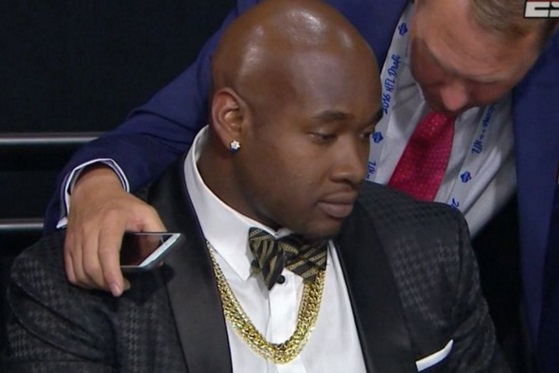
Mike McNeil AuburnMike McNeil, a safety on Auburn’s 2010 national championship football team, has accused the program of academic fraud, paying players, violating recruiting rules, and targeting players based on looks for random drug testing, according to a report by Roopstigo.

McNeil is one of four former Auburn football players who were kicked off the team after being charged with armed robbery in 2011. One of the players, Antonio Goodwin, was found guilty last year and sentenced to 15 years in prison. McNeil refuses to take a plea deal because he insists his innocence. He is scheduled to go to trial on April 8.

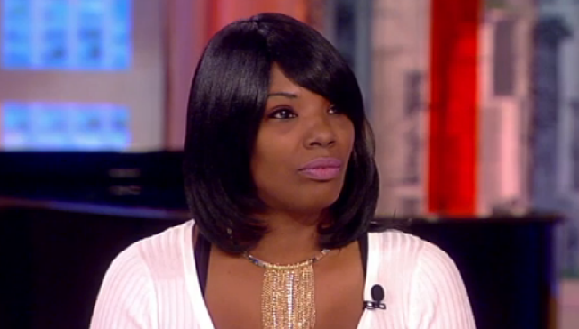
In an excellent investigative report by Selena Roberts, formerly of Sports Illustrated and The New York Times, McNeil levies numerous accusations against Auburn’s football program. He says the program and school disassociated themselves from the players after the charges. His mother also accuses Auburn and the local police of trying to keep the armed robbery story from the media.

According to Roberts, academic fraud in the form of grade changing was common at Auburn. Three Auburn players say they were told as many as nine of their teammates would be ineligible to play in the BCS National Championship Game on Jan. 10, 2011, but somehow all of them were cleared. McNeil says he had a grade changed from an F to a C after going through the athletic department (he had no luck having the grade changed when he approached the teacher and the teacher’s boss).

Roberts documents instances of Auburn paying players. Former wide receiver Darvin Adams, who led the team with 52 catches and 963 yards during the 2010 season, says coaches offered to pay him thousands to keep him from entering the NFL Draft. He left school and went undrafted. A scout reportedly says Auburn coaches gave negative reports to NFL teams about him.

McNeil says former Auburn defensive coordinator Will Muschamp, now the head coach at Florida, gave him $400 in cash after a practice. McNeil indicates there was no real motivation for the payment. He also says coaches gave players much more than the $50 maximum allowable daily amount for students hosting recruits for visits. He says the amount would be as much as $500 when they were hosting a top recruit, such as Dre Kilpatrick, who eventually signed with Alabama and became a first-round pick in the NFL Draft.

Read The Rest of the Story…

By Larry Brown | October 10, 2012 - Posted in NCAA Violations

The NCAA is often criticized for its strict rules and practices, and restrictions like this are not going to help the organization’s image.

In an “educational column” posted on the NCAA’s website Wednesday, rules pertaining to photos sent to prospective student-athletes (aka recruits) were discussed.

There was one particular rule that stands out because it reflects everything that makes the NCAA so petty and unlikable. Apparently Instagram photo filters are a violation of NCAA rules.

Here’s what the column explains about the rule (the column was written in a question-and-answer format):

Question: May a coach take a photo and use software (e.g., Instagram, Photoshop, Camera Awesome, Camera+,) to enhance the content of the photo (e.g., changed color of photo to sepia tones or add content to the photograph), and send it to a prospective student-athlete as an attachment it to an email or direct social media message?

Answer: No, a photograph that has been altered or staged for a recruiting purpose cannot be sent to a prospective student-athlete.

Instagram is a social media service based around users uploading photos. It offers different tools to add a filter to the photo, such as turning an image black and white. And that’s considered an NCAA violation for coaches.

It’s rules like this that led former Florida State football coach Bobby Bowden to say that the NCAA makes it impossible to run a clean program. While some violations are more serious than others, something like this seems so petty that it makes you wonder why the NCAA bothers with it.

As lame as this rule is, it may not be the most seemingly pointless rule the NCAA has created. This one for sure is.

Also see
Vitamin Water drinks banned by NCAA
Mississippi State billboards ruled an NCAA violation

H/T Athlete Scholarships

USC did on Saturday what its become most known for in the sports world recently: win big in football, and have some players accused of violating NCAA rules.

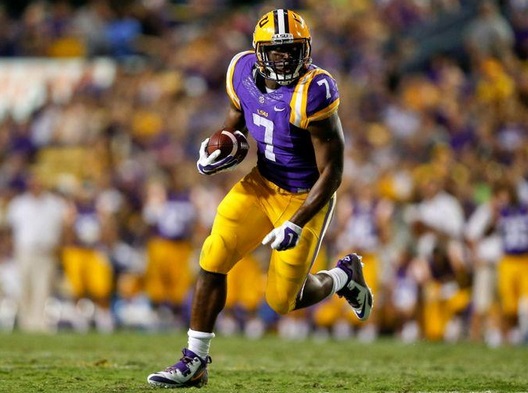
The LA Times published a report on Saturday alleging that Scott Schenter, a corrupt figure in the LA city assessor’s office, provided ex-Trojan athletes Joe McKnight and Davon Jefferson with improper benefits. McKnight, a former running back now in the NFL with the Jets, is accused of being provided with a car and plane ticket by Schenter. Jefferson, a former basketball player, reportedly accepted $3,700 in cash.

The school plans to investigate the claims and could be subject to NCAA penalties.

Schenter has been charged for his role in a scandal where he allegedly offered tax breaks to folks in exchange for campaign contributions to Assessor John Noguez.

The Times uncovered emails from Schenter to Mercury Insurance that suggest he was insuring a Monte Carlo for McKnight to drive. They also found a receipt for an airline ticket purchased by Schenter for a passenger named “Joe McKnight,” who was flying to Louisiana — which is where McKnight is from.

Schenter told the times he provided the car to McKnight and cash to Jefferson.

McKnight was at the center of a car scandal in 2009 while in school when he was seen with a Land Rover. The car was registered to Schenter, but McKnight claimed it was his girlfriend’s car (which LBS has been told is actually true).

Schenter was doing what so many others do: trying to pay the athletes so that they would help him out. Schenter wanted them to help market some businesses he was developing. Sound familiar? That’s similar to what happened with Reggie Bush.

As for the entire situation, if you dig deep enough at probably any D-I school, you’ll find the exact same thing. I actually would have been surprised if McKnight weren’t getting some “improper benefits.” The problem is if you’re going to accept things, it’s with the understanding that you’re getting involved with people who have some loose morals and could therefore get you into trouble.

Kansas State held out Jamar Samuels from its NCAA Tournament game against Syracuse Saturday because of an eligibility issue. Samuels reportedly accepted a $200 wire transfer from his AAU coach.

Jeff Goodman of CBS Sports spoke with Curtis Malone, Samuels’ former AAU coach with DC Assault, who confirmed he transferred the money to his former player. Malone says the money was necessary.

“It’s the same way when he played with DC Assault on road trips,” Malone told Austin Meek of The Topeka Capital-Journal. “When he didn’t have money to eat, he ate.”

“There hasn’t been anything extravagant or large lumps,” Malone said. “I don’t just give a kid money …”

Malone indicated to reporters he didn’t think what he did was breaking rules because of his relationship with Samuels’ family. Maybe he figured it was like an uncle giving his nephew some money to get by while in college.

Regardless, the NCAA doesn’t mess around when it comes to players receiving money, so Kansas State took precautions and sat him. They lost to Syracuse 75-59, meaning Samuels’ last collegiate game was a 1-point effort against Southern Miss. on Thursday. That’s a pretty crappy way to have his college career end, but he should have known better. I’m also not buying the “he needed to eat” excuse. Athletes have meals provided for them by the school when they’re on campus and on the road for games.

It’s becoming harder and harder to find a saving grace in college sports. Personally, I’d like to believe that the arena of college athletics is still the bastion of fine, upstanding amateur student-athletes and coaches who not only lead their teams on to the field of play but help to become mentors to sports’ next generation of leaders. (Then, again, I’d also like to believe that Erik Estrada is actually trying to sell me a valuable parcel of land in Utah that is in high demand.) However, that reality is slowly becoming tougher to believe in than the tooth fairy (even though someone in England just paid more than $31,000 for John Lennon’s molar, so apparently the tooth racket is alive and well). (Leave it to the English.)

Records show that “Eagles” is the most common nickname in Division I sports, though “Jurisprudence” might not be too far behind. There is an old joke in college football about having a school the football team can be proud of, a yarn that satirizes the fact that major college football is such a boon to many college campuses in terms of branding and revenue that academics often takes a backseat in the gridiron’s proverbial stretch limosine. This case could very well have been made at Penn State prior to the Jerry Sandusky abuse scandal which has turned the institution in State College into Sordid Valley.

Penn State was a school that had largely remained untarnished by the other scandals and incidents plaguing other schools. However, the revelations of the past week or so have caused the grandeur to be eradicated by a grand jury: a 46-year Hall of Fame coaching career blemished by a firing that abruptly took place amidst the issuing of a 40-count indictment against Paterno’s former assistant.

This latest episode certainly is the most egregious disgrace to hit college sports since 2003, when Baylor’s head basketball coach, Dave Bliss, urged players and coaches to paint Patrick Dennehy, a murder victim, as a drug dealer to soften the blow for killer/teammate Carlton Dotson. Bliss and his career still have yet to recover from the episode, even as he has attempted to coach again at the high school level.

Read The Rest of the Story…

The Miami Hurricanes football program is going down and it’s going down hard. Yahoo! Sports’ investigative report unveiled hundreds of violations committed by the program from ’02-’10. Their information comes from former booster Nevin Shapiro who’s in jail for running a $930 million Ponzi scheme. The guy is a crook, a jock-sniffer, and a pathetic wanna-be who was used by talented athletes. But anyone who denies his stories despite the overwhelming financial and photographic evidence is blind.

The thing is, this isn’t about Nevin Shapiro, his credibility, or his motives. This isn’t about whether or not the athletic department knew of the violations (it was on too large of a scale to ignore). This isn’t about whether or not Miami deserves the death penalty.

Really, this isn’t even about Miami.

The issue is we’ve learned that this is a widespread problem going on throughout most programs in Division-I college football. Changes are needed on a grand scale.

Read The Rest of the Story…

With so much talk about players breaking NCAA rules, programs being in trouble, and schools losing national championships, everyone’s trying to figure out the problem. Is it the NCAA which is running a billion dollar business in which their laborers aren’t making any money while coaches and school presidents are rich? Is it the athletes who break rules put in place by the NCAA? Is it coaches who protect the players and the program? Those are all fair questions, and the answer is the blame can be shared pretty equally by all parties. But how about one other subsection that is hardly mentioned yet was brought up by Colt McCoy’s wife. Rachel McCoy, who dated Colt during his time at Texas (here are the pics to prove it), says it’s the adult men who offer the players gifts and other luxuries that are the problem.

Rachel called into a radio show to explain her stance. She says that grown men want to give players gifts so they can brag to their friends that they’re close to athletes.

Read The Rest of the Story…