David-Ortiz-rips-Buster-OlneyDavid Ortiz is off to the best start of his career with the Boston Red Sox. A notoriously slow starter in April, Big Papi is hitting .381 with 17 RBI and four home runs through only 16 games. He missed the first 15 games of the season because of an Achilles’ injury that stemmed back to last July, but the 37-year-old returned without missing a beat.

Since Ortiz’s hot start in 2013 is unusual for a player his age who normally comes crawling out of the gate, Dan Shaughnessy of the Boston Globe decided he would be the first one to bring up the steroid talk — despite the fact that Ortiz has only appeared in 16 games.

Hitting is not this easy. Athletes do not get better as they mature into their late 30s. Baseball has been peppered with performance-enhancing drugs for the last 20 years. The cheaters are always ahead of the testers. A number of players from the Dominican Republic have tested positive for steroids. Injuries to the Achilles’ tendon are consistent with steroid use. It is not natural for a guy to hit .426 out of the gate without the benefit of any spring training.

Of course, Shaughnessy pointed to the fact that Ortiz’s name appeared on a list of players who tested positive back in 2003. That being said, he has not failed a drug test in the last 10 years. If you think Ortiz is using performance-enhancing drugs, you must think either Major League Baseball is covering for him or he has found a way to cheat the system.

Read The Rest of the Story…

By Steve DelVecchio | February 8, 2013 - Posted in Baseball

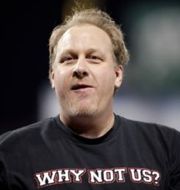
Curt-SchillingHeads began to spin earlier this week when Curt Schilling said during an interview with ESPN Radio that a member of the Boston Red Sox organization encouraged him to use performance-enhancing drugs back in 2008. Most of us assumed the revelation would lead to a major investigation from Major League Baseball, but as it turns out the matter was already addressed — more than four years ago.

What Schilling didn’t mention in his interview is that he informed then-general manager Theo Epstein that the Red Sox employee — who has since been dismissed — suggested he use steroids to recover from an injury.

“Our office was notified,” MLB vice president Pat Courtney said Thursday, via the Boston Globe. “We take any report like this seriously and there was an investigation.”

Schilling told the Globe’s Peter Abraham that “two or three” investigators from the MLB went to speak to him at the time, and two baseball sources confirmed that the person no longer works for the team. The Red Sox have made several changes to their medical staff over the years, but none were believed to be a direct result of the 2008 investigation.

“I don’t remember who they were,” Schilling said. “I was trying to downplay the whole thing because I wasn’t playing at the time and I didn’t want to cause any problems in the clubhouse. Had I known Theo was going to report it to MLB, I would have never said anything. I was kind of mad that he had to do that.”

From the sound of it, Epstein and the Red Sox handled the situation exactly the way they should have. Schilling confirmed that the incident he spoke of on Thursday was the same one that was already addressed in 2008, which makes the story far less earth-shattering. Given his history of backtracking on topics and his passion for creating drama, you have to wonder if Schilling intentionally left out the fact that this is something the Red Sox have already taken care of. Now, all the headlines that read “Schilling: Red Sox told me to take steroids” don’t seem all that fair.

Photo credit: Greg M. Cooper-US PRESSWIRE

Curt-SchillingSay what you will about Curt Schilling and his blowhard attitude, but at the time being we have no reason to believe he wasn’t one of the clean guys during a tainted generation. Schilling dominated throughout much of his career and had his fair share of injuries toward the end, but his name has not been linked to steroid use. According to the three-time World Series champion, it would have been if the Boston Red Sox had their way.

During an interview with Colin Cowherd on ESPN Radio on Wednesday (via WEEI.com), Schilling said that members of the Red Sox organization encouraged him to use performance-enhancing drugs when he was recovering from an injury in 2008.

“At the end of my career, in 2008 when I had gotten hurt, there was a conversation that I was involved in in which it was brought to my attention that this is a potential path I might want to pursue,” Schilling said before noting that the people involved are no longer with Boston. “It was an incredibly uncomfortable conversation. Because it came up in the midst of a group of people. The other people weren’t in the conversation but they could clearly hear the conversation. And it was suggested to me that at my age and in my situation, why not? What did I have to lose? Because if I wasn’t going to get healthy, it didn’t matter. And if I did get healthy, great.

“It caught me off guard, to say the least. That was an awkward situation.”

Read The Rest of the Story…

By Steve DelVecchio | October 5, 2012 - Posted in Baseball, PEDs

Robinson Cano is one of the best players in baseball, and he should be for years to come. When one of the best young players in the game is accused of using performance-enhancing drugs, it’s a major story. Whether the source who reports it is credible or not, any steroid accusation in this day and age is going to get people talking. That’s why Dan Tordjman of WSOC-TV in Charlotte tweeted out an overdue apology on Thursday.

According to the NY Daily News, Tordjman tweeted from his personal Twitter account on Sept. 20 that Major League Baseball was scheduled to announce Cano had tested positive for PED use. The MLB and the Yankees quickly refuted the information, and two weeks later Tordjman admitted he posted falso information.

Read The Rest of the Story…

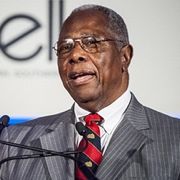
Every time a player gets caught using performance-enhancing drugs, it leads to a discussion about whether or not the punishment is harsh enough. On paper, being suspended for a third of the season for a first offense and more than half of the season for a second offense sounds pretty significant. Baseball has a 162-game season, so players who test positive lose a lot of time and money — not to mention the hit to their public image. Former home run king Hank Aaron doesn’t think it’s enough.

“I think it’s got to be a little bit more severe as far as penalties are concerned,” Aaron said at a benefit for his charity on Wednesday according to FOXSportsWisconsin.com. “I think 50 games is not enough. I’d like to see 100 games really. I think the second time, they need to just ban the player from baseball.”

Contrary to what the founder of BALCO would like you to think, I have trouble believing that steroid use is still as rampant across Major League Baseball now as it was five to 10 years ago. Unless pitchers are now the most frequent users, there’s a reason we have seen a noticeable spike in no-hitters and perfect games over the past two or three seasons.

As someone who had to watch Barry Bonds break his home run record, we can understand why Aaron feels like the punishment handed out to guys like Melky Cabrera is not enough. Other old timers like Kirk Gibson agree with his stance. While I feel that 50 games is a significant enough suspension for a first offense, I find it tough to disagree with Aaron about repeat offenders. People make mistakes and have lapses in judgment. Using PEDs after you’ve already been caught using PEDs is an entirely different set of circumstances.

However, BALCO founder Victor Conte believes Major League Baseball has a long way to go before it can be considered “clean.” During a phone interview with USA TODAY Sports, Conte described just how widespread he believes performance-enhancing drug use is across baseball.

“I would say maybe as much as half of baseball (is using PEDs),” he said. “I’m not going to name names, but I’ve talked to a lot of top players in Major League Baseball, and they tell me this is what they’re doing. There is rampant use of synthetic testosterone in Major League Baseball.”

MLB vice president Rob Manfred refuted the claim and said that Conte is simply making a “guess.” Manfred pointed to the “sophisticated methodologies” that the MLB uses to test its players, but Conte insists the tests are simple to fudge.

“To circumvent the test is like taking candy from a baby,” Conte said. “It’s so easy to circumvent. I call it the ‘duck-and-dodge’ system. The only people that get caught are the dumb, and the dumber.”

Since the conversation was based upon Melky Cabrera’s failed drug test, I guess Conte is saying he’s either the dumb or the dumber. That would certainly be easy to believe with someone like Manny Ramirez. But based on the way the offensive numbers have faded, I’m inclined to think it’s a little less than 50%. Either that, or the stuff guys were taking in the “steroid era” yielded better results.

Fist pound to Eye on Baseball

In the wake of Melky Cabrera’s 50-game suspension for elevated levels of testosterone, you can easily understand why some of the teams who have played against the Giants would be upset. As is the case with any player who used illegal performance-enhancing substances, the Giants technically cheated during the games in which Cabrera played. If the substance is helping the player pitch or hit more effectively, it is directly impacting the outcome of the game. Diamondbacks manager Kirk Gibson says the penalties need to be harsher for that reason.

“He’s had a huge impact against us,” Gibson said Wednesday according to the Arizona Republic. “And then you go back to 2008 with the Manny (Ramirez) thing. Huge impact. You compare like in the NCAA with Penn State. All those people are gone and Penn State is paying for it. Here it’s just tied to the individual. I think we need much stronger ramifications for that type of activity. It just absolutely cannot be tolerated.”

While there is no way to compensate the teams that were affected by Cabrera’s cheating, the penalty is fairly harsh. Gibson likely believes players should be suspended for a full year right off the bat, and I’m sure a number of people feel the same way. However, a 50-game suspension is extremely significant – especially at this point in the season. The Giants will now be without arguably their best hitter down the stretch and into the early part of the playoffs. The suspension could have an enormous impact on their team going forward, as it should.

H/T Eye on Baseball
Photo credit: Matt Kartozian-US PRESSWIRE