Major League Baseball and the MLB Players Association are in a stalemate over how many games should be played this season, and the union wants to play at least twice as many as the league is proposing.
Initial reports indicated that MLB owners want to play somewhere between 50 and 60 regular season games. According to ESPN’s Jeff Passan, the number is even lower. MLB is looking for a 48-game season with pro-rated salaries for players, while the MLBPA is seeking the same deal over 82 games.
An 82-game season would allow players to collect slightly more than half of their regular salaries. Sources told Passan that MLB has not come out and proposed a 48-game schedule yet, but discussions among owners have focused on that number.
If you want to learn more about the potential financial impact of a shortened season, Passan provided a lot more detail about how much money the league stands to make — or lose — in certain hypothetical situations.
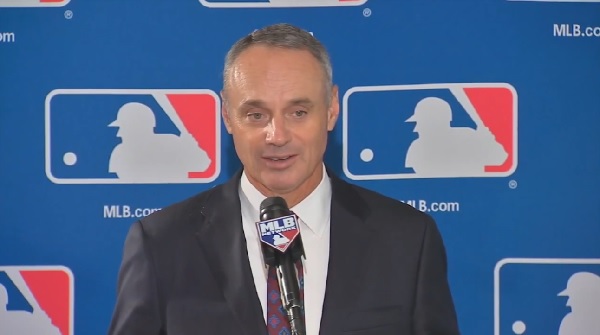
The ongoing battle between MLB and the union is a complicated one. The two sides agreed on March 26 to a shortened season with pro-rated salaries for players, but team owners have since gone back on that due to uncertainty about whether or not fans will be able to attend games. Language in the March 26 deal allows MLB commissioner Rob Manfred to make a decision about the length of the season and force players to show up, otherwise they would risk being placed on the restricted list and losing service time.
Of course, it is not that simple. As Passan notes, players could show up for work but make life difficult for the league by refusing to cooperate with things that would improve television broadcasts (ie: wearing microphones and agreeing to interviews). That is why simply launching the season and demanding that players show up is not an ideal option for the league.
There has been some optimism about the season not being canceled even if MLB and the MLBPA can’t come to an agreement, but that would be an ugly outcome no matter how you look at it.