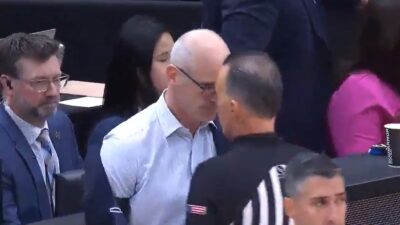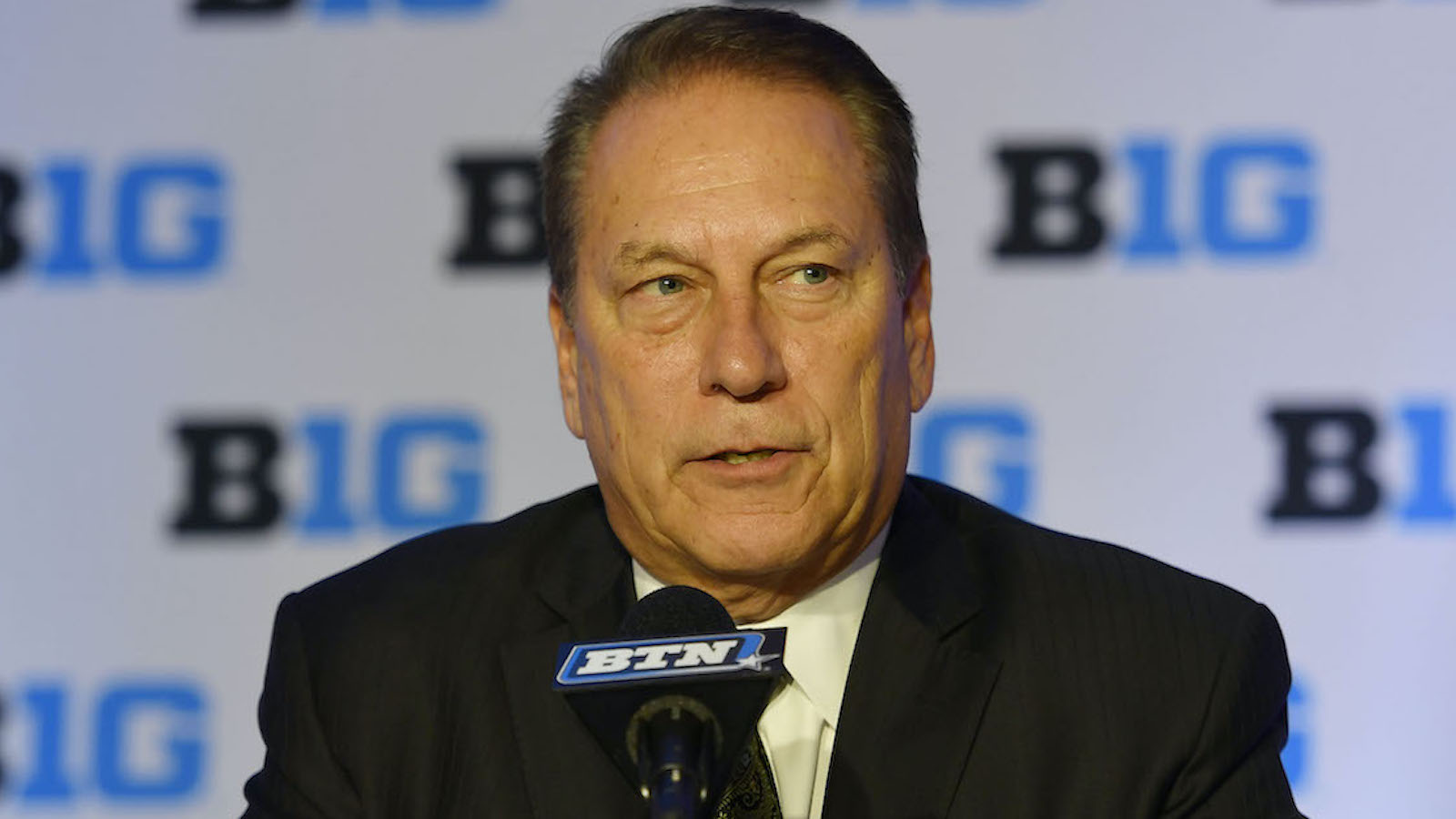
Michigan State head coach Tom Izzo advanced to the Sweet 16 of the NCAA Tournament for the 17th time in his career, extending the Spartans’ streak of 27 consecutive tournament appearances.
With two more victories standing between his program and a ninth Final Four, the veteran coach faced renewed scrutiny over his intense, demanding sideline demeanor during a week of national debates about yelling coaches.
Izzo, who has amassed 764 career victories since taking over in 1995, made no apologies for his approach.
“I’m at one point in my career that I’m happy. I don’t give a damn. I don’t,” he said, via Reuters. “But I’ll tell you what, I don’t have many players that leave. I don’t have many players that don’t come back. So somebody must enjoy something.”
Critics have highlighted Izzo’s nostril-to-nostril corrections and passionate outbursts as overly abrasive. The coach pushed back, arguing that such intensity stems from accountability rather than anger.
“Our job? Accountability is going to be big until I leave. If that bothers some people, God bless them,” he stated.
Izzo addressed perceptions of modern sensitivities, echoing commentator and retired NBA great Charles Barkley.
“I definitely think it’s a problem. God bless Charles,” Izzo remarked, referring to discussions about parents and media growing “soft.”
He added that his style is often misunderstood.
“It’s so misunderstood sometimes, too. I mean, everybody says stuff differently. I had a football coach that couldn’t say hello without swearing. Didn’t mean he was mad at me. It was just part of his language,” Izzo said. “I’m Italian, I speak with my hands, sometimes my voice.”
Izzo stressed the importance of holding players to high standards both on and off the court.
“You know what, do your job right, go to class, I don’t want to hear about not going to class. Cutting out, I don’t want to hear about cutting out,” he said. “If you’re that dumb — bad word but the truth — that you think any coach in America would be yelling at a guy because he did it wrong once or twice or five times or 10 times, you have no idea what coaching is all about.”
Looking ahead to a matchup against UConn’s Dan Hurley, whom he respects, Izzo praised similar passion in his counterpart.
“I’m going against Danny Hurley. I love Danny Hurley,” he said. “He’s not afraid of saying what he has to say to the players he has. … But do you ever question his passion? Do you ever wonder if he really cares?”
As debates swirl over coaching styles in an era of shorter attention spans and heightened scrutiny, Izzo remains committed to his proven methods that have sustained long-term success and player loyalty.